Buying guides
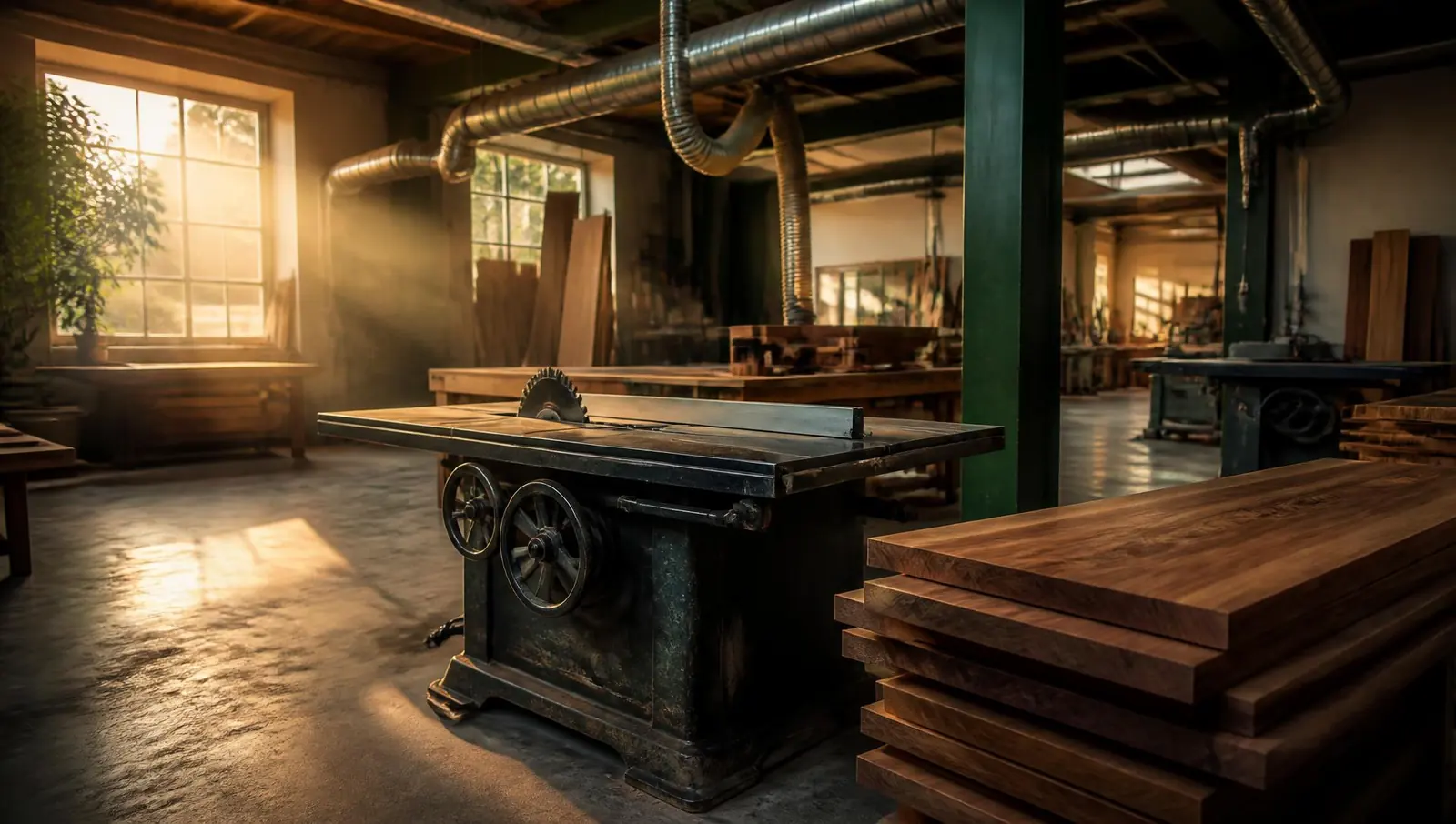
Choosing your first cabinet saw
Rip capacity, fence quality, and trunnion mass matter more than raw horsepower. A 3 HP saw on a stable trunnion outperforms a 5 HP saw that drifts out of parallel.
8 min read
Nationwide freight with liftgate service on every machine order.
Practical guidance on picking machines, wiring them, ducting them, and running them without losing a finger.
Rip capacity, fence quality, and trunnion mass matter more than raw horsepower. A 3 HP saw on a stable trunnion outperforms a 5 HP saw that drifts out of parallel.
8 min read
A jointer makes one face flat and one edge square. A planer makes the second face parallel to the first. Neither replaces the other, and buying one without the other leaves you halfway to flat stock.
6 min read
Set a dial indicator in the miter slot, mark one tooth, and measure it at the front and back of the throat. Shim the trunnion until the two readings match within a few thousandths.
12 min read
Work backwards from the largest single machine. A 12" planer wants roughly 800 CFM at the port; duct runs, elbows, and flex hose all take their cut before the air reaches the impeller.
10 min read
Single-phase shops running three-phase machines need a rotary or VFD converter sized above the largest motor's starting load. Bring the nameplate amperage to the conversation.
9 min read
A riving knife prevents the offcut from pinching the blade — that pinch is what kicks stock back. Keep it installed for every through cut, and keep hands out of the blade's plane.
7 min read
Plan the path before the truck arrives. Pallet jacks need hard flat floors; machinery skates handle rough concrete better. Level to the table, not to the floor.
11 min read
Shop vacs move little air at high pressure — good for sanders. Cyclones move lots of air at low pressure — right for planers, jointers, and saws.
5 min read